Monday, July 14, 2025

Marvellous Moths - Wykeham Causeway 03/07/2025


    Wykeham Causeway - 03/07/2025

    On the evening of the 3rd, local moth recorder & friend Allan Rodda, invited me to join him at one of his sites situated along Wykeham Causeway. Allan has played a crucial part in a lot of my moth recording trips recently. The lending of equipment, the manufacturing of new traps & tinkering with older ones, when there has been teething problems has all played a vital role - and before we continue into the blog, it must be noted how grateful for this I am.

    Regarding the moth recording session, it should be noted from the start that the traps we used on this evening, were all set up on private land & no public access is allowed. A couple of traps were left in specially cut field margins alongside hedgerows and shrubbery, whilst we went off and used two lights mounted on tripods, over white sheets, down one of the private lanes.

    When it was decided we would be heading to the Causeway, the weather forecast looked perfect, however on arrival, it seemed we had been deceived by a sneaky breeze that had arisen making it slightly cooler than we had hoped. However, not to be deterred we cracked on lighting up around 2215. As the session started, thankfully, the wind did drop and noticeably moths started to appear. It was interesting to note how at certain times, certain species would appear - for example the night started very strong with lots of Yellow-Tail being the first to be drawn in - then we would have flurries of other species such as Light Emeralds, Swallow-Tailed & Common Footman.

One of the Tripod Lights

    The session would run until about 00:30 when we started to pack up and retrieve the other two traps that had been left in the fields further down the road. Overall, it worked out to be a fairly productive night producing 343 moths from 80 species in just over 2hrs total. I will provide a full list as usual at the end of the blog - but let's have a look at some highlights.

    Numbers wise - the top 5 moths recorded were:

Smoky Wainscot 42

Yellow-Tail 30

Common Footman 21

Eucosma Cana 20

Uncertain/Rustic 20

     The rest of the pictural highlights will come in the form of the newer moths for the year & maybe the odd "better looking" moths.

    First up is Beautiful China-Mark. 3 of these little stunners were recorded over the evening.

Beautiful China-Mark

Beautiful China-Mark (Nymphula nitidulata)

Size: 18-22mm Wingspan

Flight Season: July - August

Larval Foodplant: Bur-reed & other water plants

Total Records: 820    Total Specimens: 2,440

Confusion Species: Brown China-Mark & Ringed China-Mark

    This distinctive and well marked species is another where its larvae are aquatic based and spend their time feeding on aquatic plants such as Bur-reed. Unsurprisingly, given this information, the adults can then be found in habitats featuring waterways such as rivers, lakes and ponds. Within Yorkshire, Beautiful China-Mark is still a scarce and localised resident with it only being recorded in VC65 for example as recently as 2000. The species has seen a real upward trend over the last decade with 2,024 of the 2,440 specimens recorded in those last 10 years. 2015 was a booming year with 555 specimens recorded in just 1 year.

    Our second species to have a closer look at will be Double Lobed. A single specimen was recorded.

Double Lobed

Double Lobed (Lateroligia ophiogramma)

Size: 13-16mm Forewing

Flight Season: June - August

Larval Foodplant: Grasses

Total Records: 2,680    Total Specimens: 4,479

Confusion Species: n/a

    
    Double Lobed is a fairly common resident across Yorkshire and up until writing this report, I believed it was a species I hadn't encountered before, however I noticed there was a record around RSPB Bempton Cliffs and it turns out I had recorded this moth on 1 occasion - 15/07/2022 - making up 1 of the 6 records for the Flamborough Headland. At Wykeham Causeway however there are slightly more records - 23 since 2017. Across Yorkshire, between 2014 & 2021 records sit between 113 & 376 specimens each year and the species hit a new peak in 2022 of exactly 500! For some reason though, this species has gone on a large downward trend since then - 2023 gave 148 specimens and 2024 only mustered up 63 - a staggering 87% decrease in 2 years.

    For our 3rd species we will switch it up size wise & head "Micro". This moth comes in the form of Zeiraphera isertana - and most importantly this record is a new species for the site!!
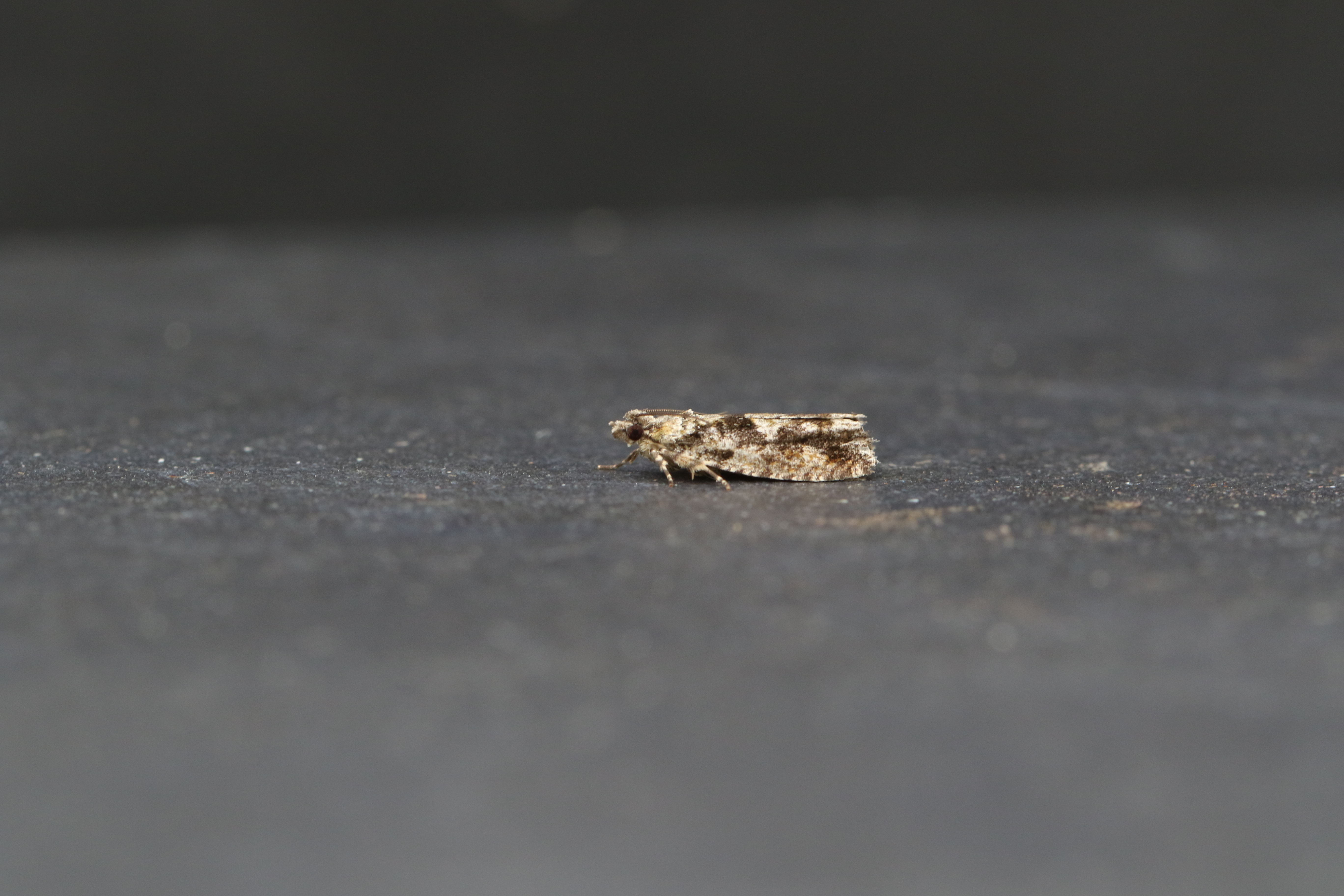
Zeiraphera isertana

Zeiraphera isertana (Mottled Oak Tortrix)

Size: 14 -19mm Wingspan

Flight Season: July - August

Larval Foodplant: Oak

Total Records: 319    Total Specimens: 425

Confusion Species: Zeiraphera griseana

    Whilst a fairly common species across the UK, featuring pretty much anywhere that there is Oak present for the larvae to feed on, Z. isertana remains a rare and local resident within Yorkshire, taking until 2004 to finally appear in VC65. The closest previous records to Wykeham Causeway are 2 records on the edge of Scarborough in 2024, 1 record near Malton in 2021 & 1 record towards the Hole of Horcum in 2019. Since the turn of the century, this species has been on a fairly steady upward curve and now receives between circa 20 & 40 specimens each year across the county. Overall certainly nice to get something new for the site. 😃

    Our 4th moth to take a more in-depth look at is definitely one I haven't recorded before - Large Twin-Spot Carpet.

Large Twin-Spot Carpet

Large Twin-Spot Carpet : Xanthorhoe quadrifasiata

Size: 14 - 16mm Forewing

Flight Season: June - August

Larval Foodplant: Herbaceous Plants

Total Records: 4,017    Total Specimens: 7,046

Confusion Species: Dark-barred Twin-Spot Carpet

    Large Twin-Spot Carpet is mostly found in areas of damp woodland and was actually a later arrival into the county of Yorkshire - having only been found as recently as 1978 and since then has gone about its business spreading northwards. The larvae tend to feed on low growing plants such as bedstraw (Galium). Year on year, this is a species that generally continues on an upward trend having started at around 45 specimens in 2000, dipping to 23 in 2003, before continuing up to its peak in 2022 at 649 specimens. However like Double Lobed earlier it then has declined over the last couple of years - 212 specimens in 2023 & 233 in 2024.

    The final moth we will take a look at, is another that always provides a nice bit of colour. One that Allan rightly described as "if it was a butterfly, people would travel miles to see it".

Large Emerald
Large Emerald (Geometra papilonaria)

Size: 24 - 29mm Forewing

Flight Season: June - August

Larval Foodplant: Birch, Hazel & Alder

Total Records: 2,113    Total Specimens: 3,469

Confusion Species: n/a

    Large Emerald is a common and widespread species across Yorkshire. Wykeham Causeway actually holds the record for the most specimens recorded at 1 site in a session. 26 were recorded by Allan Rodda & Jackie Holder on 30/06/2020. Generally the species has an upward trend since 2000. There are several peaks & troughs however it has gone from 25 specimens in 2000 to 148 in 2024 with the largest peak in 2021 with 362. 

    Overall a fantastic couple of hours and I think you'd agree any session where you can find moths you've never seen before and also moths that are new for the recording area, are exactly why you record data like this and put in the longer nights or early mornings.

    Full list of species recorded below:

Agapeta hamana 3

Anania coronata 2

Barred Fruit-Tree Tortrix 1

Barred Straw 6

Beautiful China-Mark 3

Beautiful Hook-Tip 6

Bird-Cherry Ermine 10

Bright-Line Brown-Eye 1

Broad-Bordered Yellow Underwing 1

Brown Rustic 1

Buff Arches 3

Carcina quercana 1

Chrysoteuchia culmella 4

Clay 5

Clouded Border 4

Clouded Silver 1

Common Footman 21

Common Lutestring 1

Common Wainscot 2

Common White Wave 2

Coxcomb Prominent 4

Dark Arches 3

Dingy Footman 7

Dingy Shears 4

Double Lobed 1

Double Square-Spot 9

Drinker 3

Dun-Bar 1

Engrailed 2

Eucosma cana 20+

Euzophera pinguis 1

Fan Foot 1

Flame 1

Flame Shoulder 3

July Highflyer 3

Large Emerald 5

Large Fruit-Tree Tortrix 1

Large Twin-Spot Carpet 3

Light Arches 2

Light Emerald 2

Marbled Minor Agg. 1

Middle Barred Minor 1

Mother of Pearl 5

Mottled Rustic 3

Narrow-Winged Pug 1

Peach Blossom 2

Plain Golden Y 2

Poplar Grey 2

Poplar Hawk-Moth 1

Purple Clay 1

Pyrausta despicta 1

Riband Wave 1

Ruby Tiger 1

Sandy Carpet 4

Scarce Footman 2

Scoparia ambigualis 3

Setaceous Hebrew Character 1

Short-Cloaked Moth 1

Shoulder-Striped Wainscot 3

Silver-Ground Carpet 2

Single Dotted Wave 1

Small Blood-Vein 3

Small Fan Foot 1

Small Fan-Footed Wave 8

Small Magpie 8

Small Rivulet 3

Small Yellow Wave 1

Smokey Wainscot 42

Snout 9

Spectacle 1

Straw Dot 3

Swallow-Tailed Moth 3

Udea olivalis 3

Uncertain/Rustic 20

Water Veneer 2

White Satin 2

Willow Beauty 4

Yellow-Tail 30

Zeiraphera isertana 1

    If you have made it this far, thank you once again for taking the time out of your day to have a read - any suggestions on format etc are greatly appreciated.

Thanks must be added to the following organisations/websites where some of this data has been extracted:

Butterfly Conservation - Home page | Butterfly Conservation

All of the moth recorders, County Recorders, Vice County Co-ordinators and website admins who make all of this data - make sense! 


Friday, July 11, 2025

Marvellous Moths - Lyell Street 29/06 - 30/06 2025


Lyell Street, Scarborough 29/06 & 30/06 2025

     As the temperatures started to increase to the level where most people in Britain, complain that it is now "too hot", the conditions for moths become more productive. I decided that as I was working on early shifts for this period, I wouldn't be able to venture very far on the evenings as I needed to be up at 4am to get ready - this meant any recording would have to be done at home. As you know from my previous session at home (Marvellous Moths - Introduction) my yard is in the middle of terraced streets, suffers from light pollution, but does have some favourable habitat, fanning out from the ends of the street.

    I will summarise the highlights for each night and point out any notable records for my yard. It should be noted that any duplication of species/numbers on the 2nd night are different moths to the first. Moths from 29/06 were retained to ensure that there was no duplication of data.

29/06/2025

    On the night of the 29th, 47 moths from 20 species were recorded. The most prevalent moth was Bird-Cherry Ermine which contributed to 21 of the 47 moths.

    The first moth we will look at is going to be from the micro section of the moth book in the form of Argyresthia cupressella.

Argyresthia cupressella

Argyresthia cupressella (Cypress Tip Moth)

Size: 8-9mm wingspan

Flight Season: June - July

Larval Foodplant: Cypress & Juniper

Total Records: 1,047    Total Specimens: 1,708

Confusion Species: Argyresthia dilectella (Juniper Tip Moth)

    This tiny character doesn't actually originate from the UK and was actually first introduced from North America through the plant trade - being imported with conifers. It first appeared in the UK in 1997 where it was discovered in Woodbridge, Suffolk. From then this species has spread northwards and by 2014 it had appeared in all five Yorkshire Vice-Counties. Numbers have plateaued in recent years despite the rapid increase, however can and will still be found where Cypress & Juniper grow.

    Our next moth always provides a nice bit of colour variation and shape to the early mornings. Interestingly of note this species I have never actually found in my moth trap at home - always perched somewhere nearby - usually on the side of a plant pot. That species is the Swallow-Tailed Moth.

Swallow-Tailed Moth

Swallow-Tailed Moth (Ourapteryx sambucaria)

Size: 22-30mm forewing

Flight Season: June - August

Larval Foodplant: Varied trees & shrubs - preferring Ivy

Total Records: 11,750    Total Specimens: 21,041

Confusion Species: n/a

     This large and potentially very vibrant species continues to be a common and widespread moth, across Yorkshire. The larvae whilst predominantly feeding on broad-leaved trees, meaning the species favours woodland habitat, the adults can be seen frequently flying in gardens. There are hints at second broods appearing with records now being found in October and even stretching into Early November with favourable conditions.

    The final moth for the 29th comes in the form of a little green gem - that when fresh is a vibrant mix of greens and blacks, however like all moths of similar colours they do fade and wear quickly. That moth is V-Pug (and not it doesn't look like a dog). 🤣

V-Pug

V-Pug (Chloroclystis v-ata)

Size: 9-11mm forewing

Flight Season: May-June (1st Brood) & July-August (2nd brood - moths generally larger)

Larval Foodplant: Lots! Favours elder and brambles however is not a picky eater.

Total Records: 2,412    Total Specimens: 2,880

Confusion Species: Green Pug

    The V-Pug is a fairly common and widespread moth across Yorkshire, however when it is seen, it is generally only in records of 1 or 2. Within Yorkshire 95% of records fall into this category. Annually, there are probably around 100-150 specimens recorded each year on average, having gone through a little bit of a recovery since 2012, where there was a large drop-off, with only 18 specimens recorded for that year. Saying that, last year there was another decline, with only 86 specimens in 2024 compared to 320 in 2023 (the most in the last 25 years) - a decline of 73%! This record though does present as a new one for the 2km Tetrad where my house is which is always a nice addition, and another gap filled in on the distribution map of Yorkshire Moths.

30/06/2025

    Now I know Hawk-Moths get a lot of limelight within the moth world - and rightly so, however if you are an experienced moth-er chasing those rarer species I appreciate they can become a bit one track - heard it all before. However I have to mention them here with a little back story. In my yard I have never recorded a live Hawk-Moth of any species. I did find a deceased one (Elephant Hawk-Moth) several years ago, that had obviously made its way towards the trap before (and I can only assume based on the look) being battered about by one of the local cats. 😢. Fast forward to the previous session - I did get very excited as there was 1 Elephant Hawk-Moth in there - however we shall just skip to this session and upon checking the trap I was blown away as perched around the egg cartons were 4 more! This meant I had gone from having only the deceased one to 5 fresh and flying Elephant Hawk-Moths in 2 nights!  As mentioned earlier there was no duplication as the other specimen was retained.

Elephant Hawk-Moth (File photo)
    

    For more information on this species I will refer you back to a previous blog to save repetition (Marvellous Moths - Askham Bog). 

    Overall in this session 67 moths from 31 species were recorded with some interesting highlights both for the yard and a personal level (not that the addition of the EHMs wasn't interesting) - so lets have a look at a couple of the others.

    The first moth we shall take an in-depth look at is a new species for me and naturally with that new for the yard too - Dingy Shell.

Dingy Shell


Dingy Shell (Euchoeca nebulata)

Size: 9-12mm forweing

Flight Season: May-August

Larval Foodplant: Alder

Total Records: 420    Total Specimens: 498

Confusion Species: Small Yellow Wave & Rannoch Looper

    This little delight is actually quite a good record for a couple of reasons. Firstly is just the small number of them, that have been recorded over the years. It wasn't until 2009 that in the whole of Yorkshire there was double digits recorded across the county in a single year. Since then the species has been on a steady rise peaking in 2023 with 88 specimens recorded. However in 2024 this decreased sharply by nearly 80%, falling to just 18 specimens. Secondly the larvae of this distinctive moth - which sports a raised wing position, feed solely on Alder and with that this species generally doesn't make it into gardens too far from the larval foodplant. I can only assume that in the small wooded areas at the park or in the cemetery nearby there is a localised patch of Alder to support the species in some way. 

    This record also marks only the 2nd for Scarborough (within the town limits) with the first being recorded in 1883 - some 142 years ago. The next closest records are out at Wykeham with 6 specimens over the years.

    The final moth we shall take a closer look at is one that seems to be having a particularly good year in Yorkshire, so it probably comes as no surprise to have found one in the yard - Muslin Footman.

Muslin Footman

Muslin Footman (Nudaria mundana)

Size: 10-12mm forewing

Flight Season: June - August

Larval Foodplant: Lichens that grow on rocks/walls/fences/gateposts/bushes

Total Records: 3,564    Total Specimens: 16,972

Confusion Species: Round-Winged Muslin 

    The Muslin Footman is a local resident within Yorkshire currently favouring it seems anywhere but South-East Yorkshire, although there are several records over the past years from the Spurn Point area. The species has increased since the turn of the century from when there was just 101 specimens in 2000-2002 compared to 1,950 in the last 3 years and in turn a stable population, year on year.

    I will finish off with a list for each day of the moths that were recorded and of course the usual thanks to everyone who contributes to making this blog possible.

Moths Recorded 29/06

Agapeta hamana 1

Argyresthia cupressella 1

Bird-Cherry Ermine 21

Brown House Moth 1

Buff Arches 1

Buff Ermine 1

Common Pug 2

Dusky Brocade 1

Elephant Hawk-Moth 1

Eudonia lacustrata 1

Heart & Dart 2

Light Brown Apple Moth 1

Marbled Beauty 3

Riband Wave 4

Small Magpie 1

Smoky Wainscot 1

Swallow-Tailed Moth 1

Uncertain/Rustic Agg. 1

V-Pug 1

White Satin 1

Moths Recorded 30/06

Agapeta hamana 2

Beautiful Hook-Tip 1

Bird-Cherry Ermine 8

Bright-Line Brown-Eye 1

Buff Arches 1

Burnished Brass 1

Cabbage Moth 2

Chrysoteuchia culmella 6

Dark/Grey Dagger 2

Dingy Shell 1

Elephant Hawk-Moth 4

Eudonia sp. 2

Fan Foot 2

Heart & Dart 2

Large Yellow Underwing 5

Light Emerald 1

Marbled Beauty 6

Marbled Minor Agg. 3

Muslin Footman 1

Poplar Grey 1

Riband Wave 3

Small Blood-Vein 1

Small Dusty Wave 1

Small Magpie 2

Small Rivulet 1

Smoky Wainscot 1

Snout 2

Stenoptilia sp. 1

Swallow-Tailed Moth 1

Tachystola acroxantha 1

Willow Beauty 1

If you have made it this far, thank you once again for taking the time out of your day to have a read - any suggestions on format etc are greatly appreciated.

Thanks must be added to the following organisations/websites where some of this data has been extracted:

Butterfly Conservation - Home page | Butterfly Conservation

All of the moth recorders, County Recorders, Vice County Co-ordinators and website admins who make all of this data - make sense! 


Saturday, June 28, 2025

Marvellous Moths - RSPB Bempton Cliffs 27/06/2025


RSPB Bempton Cliffs 27/06/2025
 

    Those that know of the infamous RSPB site, located on the East Coast of Yorkshire, will without doubt have heard of it for it's seabirds - and rightly so! Situated on the face of a towering 400ft high, chalk cliff, 500,000 of the UKs seabirds call it home. Perched on ledges no more than a few inches wide are birds such as Razorbills, Guillemots and Kittiwakes. The natural sea arch of Staple Newk and the surrounding cliff is residence to a large portion of the Gannet colony - some 25,000 strong; making it the largest mainland colony of Gannets in the UK. The real draw for most visitors are of course the Puffins. Hidden away, utilising the cracks and the crevices, these "clowns of the sea" draw people from across the world, all in the hope of stealing that glimpse of those orange feet & beak.

    However despite all of this hustle and bustle that occurs mainly between April & July, it comes as no surprise that we are here for the Moths. The habitat offers some diversity in the form of Coastal Grassland, Scrubland with surrounding Farmland. Its location, jutting out approximately 4 miles further than that of the main coastline above and below it means that on the right night, with the right conditions it can be a hotspot for picking up some migratory species as well. 

    My ability to record at RSPB Bempton Cliffs has dropped off since last year mainly due to the fact that I no longer work there, having left in September 2024. Working there, generally 4 out of 5 days a week, throughout the whole summer, afforded many an opportunity to get the moth trap out with some good results. Despite it being more of a challenge to find the time, I want to ensure I can make the most of any opportunities that do offer themselves. The 27th, on paper was mixed. The positives being partially cloudy, with highs of 26c & a low of 20c. The negative was the wind - SW 14mph with gusts of potentially 35mph were forecasted - and they weren't too far wrong. Would this affect the results - time will tell.

View across the fields, towards the Clifftop


    Arriving at 0515, with the wind still occasionally gusting, I wasn't overly confident that there would be much around despite the warm weather - how I was mistaken. Certainly not a bumper haul, but one that gives you enough confidence that there could be something good under one of those egg cartons. 

    I have made some amendments to how the data is presented which will hopefully be a little less on the eyes & have also included some additional information for new recorders such as Flight Seasons of moths, to give you an idea of when these species can generally be observed. Let's look at the highlights of which for this blog will be the most recorded moths for this session - however please do take a look at the notable records towards the end for some extra facts.

    Firstly, the moth that was observed the most. For those that record regularly, it probably doesn't shock you that it was the Large Yellow Underwing.

Large Yellow Underwing

Large Yellow Underwing (Noctua pronuba

Size: 21-26mm forewing. 

Flight Season: June-November

Larval Foodplant: Herbaceous plants & Grasses

Total Records: 108,033    Total Specimens: 1,965,901

Confusion Species: Lunar Yellow Underwing & Lesser Yellow Underwing

This variable looking moth was recorded 40x and made up just under 1/5th of the nights moths. This abundant and widespread moth, makes itself well known at this time of the year, with counts on certain nights reaching into the several hundreds. At RSPB Bempton Cliffs during an event over 2 days in 2023, 345 specimens of Large Yellow Underwing were recorded by Allan Rodda & myself. In 2024, Mike Coverdale recorded 298 in a single evening on the reserve too. Without doubt the record holder of "Most recorded moth in Yorkshire" with nearly 2 Million specimens - of which just under 7.5% of those were recorded in 2023 - a bumper year for LYU!

    Secondly we have Marbled Minor Agg. - another one of these where multiple species without dissection, must be recorded as  aggregate - Agg. (A combination of Marbled Minor, Tawny Marbled Minor & Rufous Minor). The current record in a single session for this moth, at this site is 97 - 06/07/2019.

Marbled Minor Agg.

Marbled Minor Agg (Oligia strigilis agg.)

Size: 11-13mm forewing

Flight Season: May-July

Larval Foodplant: Grasses

Total Records: 28,629    Total Specimens: 106,593

Confusion Species: n/a

    The 3rd moth on the list comes in the form of Dark Arches. 13 were recorded during this session. It is another very common moth within Yorkshire - securing 3rd place last year despite a 20% decrease on numbers from 2023.

Dark Arches

Dark Arches (Apamea monoglypha)

Size: 19-26mm forewing

Flight Season: June-August

Larval Foodplant: Grasses

Total Records: 61,087    Total Specimens: 470,427

Confusion Species: n/a

      
    This abundant and widespread resident, is a regular appearance in the trap over the summer months in most places across Yorkshire with only a few small gaps on the distribution map. Although predominantly a summer species, there are signs that a small, second generation is starting to appear and can generally be seen between September & November. The record for a single session on this site was back on the 24th July 2013 when 121 were recorded.

    The next moth in terms of numbers was Dark/Grey Dagger with 10. We have gone into detail about this moth in a previous blog (Marvellous Moths - Introduction) and how the specific species can't be determined without dissection as an adult or finding larvae. If you wish to read more then, please do head back to the blog mentioned above. The moth we will move onto was recorded 9x and will actually make a good comparison to our previous moth - we will look at Light Arches.

Light Arches

 Light Arches (Apamea lithoxylaea)

Size: 18-23mm forewing

Flight Season: June - August

Larval Foodplant: Grasses

Total Records: 14,195    Total Specimens: 43,179

Confusion Species: Reddish Light Arches & Pale Pinion     

    Light Arches is described as a common & widespread resident of Yorkshire, however is much less prevalent than it's counterpart above. This species favours areas of dry grassland making somewhere like Bempton a good habitat. Whilst this moth can be attracted to light, it is more frequent at sites using sugar - see: (https://butterfly-conservation.org/news-and-blog/a-recipe-for-moths-sugaring-wine-roping). Numbers did peak in 2019 for Light Arches with 2,953 specimens from 716 records, however these numbers have continued to decline since then with only 567 specimens from 349 records in 2024. The site record for Light Arches is 76, recorded on 17/07/2023.

    Our final in depth moth of the blog will be the Flame. This moth was recorded 7x during this session.

Flame (File Photo 2023)
Flame (Axylia putris)

Size: 14-16mm forewing

Flight Season: June - July & September (2nd Brood)

Larval Foodplant: Herbaceous plants

Total Records: 22,680    Total Specimens: 73,173

Confusion Species: Shuttle-Shaped Dart

    Flame is described as a very common and widespread resident of Yorkshire. Records had been fairly stable over the last 10-12 years with there generally being between c.2,300 & 3,600 specimens recorded each year. However in 2024 there was a staggering 50% decrease in numbers, falling from 2,335 in 2023 down to 1,145. Flame also uses camouflage to try and protect itself from predators. Wrapping it's wings close to its body, combined with its stick like colourings it can perch on shrubs and branches appearing as a broken twig - rather than a tasty snack! The site record for Flame is 9 - recorded on 24/06/2023.

Other notable records: 

• 8 Elephant Hawk-Moths were recorded which beats the previous site record of 3 on 16/07/2023.

• 4 Ghost moths (2♂ & 2♀) were recorded which beats the previous site record of 3 on 24/06/2023.

• Coronet was recorded for the first time on site - a localised moth that is slowly spreading across Yorkshire.

Coronet
    

Overall 204 moths from 41 species were recorded overnight with some really good records for the reserve, highlighting that Bempton is not just all about the seabirds! I will leave you with the full list of species recorded below and as always the usual thanks, to those who help provide this data.

Moths Recorded:

Agapeta hamana 5

Anania perlucidalis 1

Barred Straw 1

Beautiful Golden Y 1

Bright-Line Brown-Eye 3

Brimstone 1

Broom Moth 2

Buff Arches 2

Buff Ermine 1

Burnished Brass 1

Chrysoteuchia culmella 4

Clay 7

Clouded Border 1

Common Swift 1

Common Wainscot 1

Coronet 1

Dark Arches 13

Dark/Grey Dagger 10

Drinker 5

Elephant Hawk-moth 8

Flame 7

Flame Shoulder 3

Ghost Moth 4

Heart & Dart 2

Large Yellow Underwing 40

Light Arches 9

Marbled Minor Agg. 30

Notocelia uddmanniana 1

Plain Golden Y 5

Setaceous Hebrew Character 2

Shuttle-Shaped Dart 2

Small Fan-Footed Wave 2

Small Magpie 1

Small Rivulet 3

Small Square Spot 4

Smoky Wainscot 5

Snout 1

Spectacle 6

Straw Dot 1

Udea lutealis 1

Uncertain/Rustic 6

If you have made it this far, thank you once again for taking the time out of your day to have a read - any suggestions on format etc are greatly appreciated.

Thanks must be added to the following organisations/websites where some of this data has been extracted:

Butterfly Conservation - Home page | Butterfly Conservation

All of the moth recorders, County Recorders, Vice County Co-ordinators and website admins who make all of this data - make sense! 


Monday, June 23, 2025

Marvellous Moths - Forge Valley 20/06/2025


VC62 SE983783 - Forge Valley Woods (Birdwatchers Car Park) 20/06/2025 

    I decided to make the most of the continued nice weather and venture out, albeit not to far from home as staying out till 0130/0200 in the morning and then working starts to catch up with you. The location as mentioned in the title was the Birdwatchers Car Park in Forge Valley. It's a super simple location to set up at with ample space to park and locate the moth trap, surrounded by woodland and the River Derwent flows in the valley below. There is no light pollution from any surrounding houses or streetlights and the only real disturbance is from the occasional car passing - probably all wondering what I was trying to summon, stood solo, net in hand and baked in the glow of the bulb!

    The session was from 2200-0130, running my 125W MV Robinson trap which despite drawing in plenty of moths - it soon became apparent that this was also going to cause some issues towards the end of the session - but a handy learning curve none the less.

125W Mercury Vapour Robinson Moth Trap

    By the time I had finished setting up and the trap was turned on it wasn't very long before darkness came and the moths started to arrive...quickly and lots of them! Normally, there is a steady flow of moths and recently I have been recording with friends so there has been 3 of us to try and catch any moths that are about. Within the first 30-45 minutes it became obvious that tonight would be a bit of a struggle and it didn't take long to be overwhelmed with the number of moths flying about and also my inability to actually keep on top of catching/potting them up. I decided at this stage that I was fighting a losing battle and to just let the trap do it's thing - wait a couple of hours and then see what I had at the end. This in turn brought another issue in that when I came to load it back up into the car - this type of trap can't be sealed up (or at least very easily) so I had to try and empty it there and then. I proceeded to lose most of the moths in the trap, several thought inside my ears would be a good place to hide and combined with the copious amounts of flies I was trying not to ingest - in the words of James May - "Oh Cock". 

    However, I digress - moths were brought home for identification and although only 45 moths from 27 species were potted up, those that were - at least for me, offered some interesting species - so let's have a look!

    First up we have the Red-Necked Footman (Atolmis rubricollis) - Size: 15-18mm Forewing This is a species that is new for me. Although I didn't know what it was called at the time, even in the field one would be able to make a pretty good guess at it's name given the classic Footman sp. shape combined with well...its red neck!

Red-Necked Footman

2 of these were potted up however I had definitely seen more during the night but as I couldn't be sure as to how many I kept the figures at 2. This moth is a local resident within Yorkshire and like all Footmen species its larvae favour feeding on lichens in particularly on conifers. Looking at the distribution map for this species in Yorkshire, this/the surrounding Hectads (10x10km squares) are a real hotspot for this moth providing 97 records of the 315 for this species and that particular Hectad providing just under 33% of the total specimen counts. Total Specimens being 1,124 with around 350 in that singular 10x10km square.

    The 2nd new moth for me was Blomer's Rivulet (Venusia blomeri) - Size: 10-13mm Forewing. This is a very local resident within Yorkshire having not been seen in VC61 since 1904, only twice in VC65 and never in VC63! 

Blomer's Rivulet

    It is a this point as well that I realise I have managed to permanently delete the proper photos I have taken of this moth 😡 so I am afraid you will have to settle to for this photo I took with my phone, which is fortunate as this moth requires photo evidence as well, when submitting records. The larval food source for this moth is Wych Elm. Total records 271 with a specimen count of 833. 64 of the 271 records have been from the 4 Hectads surrounding/inclusive of this one with around 150 of the specimen counts also.

    The 3rd moth in todays blog was also a new one for me in the shape of Small Yellow Wave (Hydrelia flammeolaria) - Size: 9-11mm forewing. This stunning little yellow moth definitely stands out against the rest with its bold colours and patterns.

Small Yellow Wave

    This moth is deemed to be a thinly distributed resident within Yorkshire having recently not faired too well and has only provided more than 90 specimens per year on 3 occasions since 2000 - those years being 93 in 2010, 130 in 2017 & 107 in 2022. Larval food sources include Field Maple, Sycamore and Alder. Total records are 758 with 1,045 specimens, so to record 2 of these is a nice result.

    The fourth and final new moth for me was Clouded Magpie (Abraxas sylvata) -Size:18-22mm Forewing. This probably took the crown as "Moth of the Night" as well, with its bold white wings and blotchy patterns. It is currently described as a Scarce & local resident within Yorkshire.

Clouded Magpie


    This moth was much more prevalent across the county up until about the late 1960s when the more severe and aggressive strain of Dutch Elm Disease was accidently introduced to the UK and has now disappeared from many of its previous stable locations with VC62 being the main area to find it. Larval food sources will come as no surprise based off this information with Wych Elm & English Elm being the preferred choice. Total records stand at 351 with 480 specimens, so again being able to find one is a healthy record as only 8 specimens were recorded in 2024 across the whole of Yorkshire!

    In conclusion it can just show how even the most infuriating nights can reward you with some fantastic records and stunning moths to look at. All 4 of these moths are very localised or on the decline so to be able to find them and contribute towards the data is the real key victory here. I will provide a list of all the moths recorded below:

Beautiful Golden Y 1

Bird Cherry Ermine 1

Blomer's Rivulet 3

Brimstone 2

Buff Ermine 2

Chrysoteuchia culmella 1

Clouded Magpie 1

Clouded Silver 1

Common Lutestring 1

Common Marbled Carpet 1

Common Swift 1

Double Square-Spot 1

Green Carpet 1

Light Emerald 5

Mottled Beauty 1

Peach Blossom 4

Pebble Hook-Tip 1

Peppered Moth 2

Red-Necked Footman 2

Riband Wave 1

Scoparia ambigualis 1

Small Angle Shades 2

Small Yellow Wave 2

Snout 1

Spectacle 1

Udea olivalis 1

White Ermine 4

If you have made it this far, thank you once again for taking the time out of your day to have a read - any suggestions on format etc are greatly appreciated.

Thanks must be added to the following organisations/websites where some of this data has been extracted:

Butterfly Conservation - Home page | Butterfly Conservation

All of the moth recorders, County Recorders, Vice County Co-ordinators and website admins who make all of this data - make sense!    


Friday, June 20, 2025

Marvellous Moths - Askham Bog - 16/06/2025


YWT Askham Bog 16/06/2025

    As we arrive at Askham Bog, the weather can only be what feels like a near perfect summer evening for moth recording - the only criticism being that it is quite clear above with only some thin, wispy clouds gracing the light pale hue of the sky. I have travelled to Askham Bog with two colleagues from my time with the RSPB, who have both recently taken an interest in moths - fab!! Our target moth is actually quite a common one - Elephant Hawk-Moth. The reason being that one of them, has never seen it in person and we all know how Elephant Hawk-Moths can be the gateway into moths for a lot of people.

    Before we get to the moths a little bit of information about Askham Bog, the set-up and some other wildlife sightings. Askham Bog is a small nature reserve, managed by Yorkshire Wildlife Trust (YWT), nestled alongside the A64 & the East Coast Mainline. Its origins - the site of an ancient lake formed some 15,000 years ago by a retreating glacier. It was the birthplace of YWT being their first reserve and is now the only surviving remnant of Ancient Peatland in Yorkshire and once described by the renowned Sir David Attenborough as a "Cathedral of Nature Conservation".

    We arrived in the early evening - 19.45 as we had decided to have a walk round the reserve to scope out the location for the evenings recording and also to see what other wildlife we could encounter. Traversing the boardwalks, we couldn't help but notice the sheer number of Common Spotted-Orchids scattered among the damp meadows.

Common Spotted-Orchid


    Down in the grasses, many of the stems were covered in "Cuckoo Spit" - a foamy, white liquid that is secreted by the nymphs of Froghoppers of which there are 10 species in the UK. Each blob of "spit" contains one of these nymphs which all in are roughly 5mm long. The most fascinating fact is how the "spit" is created - as the nymph feeds, it forces air into fluid from its anus, in turn making bubbles (Stop giggling at the back)! It definitely has nothing to do with the bird - apart from you start to see it at around the same time as Cuckoos arrive into the UK.

"Cuckoo Spit"

    As the evening progressed, the golden glow of the sun started to leech through the foliage. Out in the open areas where the tree canopy isn't as dense, our eyes are caught by the shape of a thick-bodied bird whirring across the tree tops, combined with a high-pitched call. This bird being a Woodcock. Throughout the evening we have around 20 sightings of Woodcock in total.

    We decide to set up for the evening on one of the open areas of boardwalk, where there is still water being retained amongst the reeds, despite all of the warm weather we have been having. The equipment we are using consists of a Robinson Moth Trap which houses a 125W Mercury Vapour bulb. We have a petrol generator supplying the power, a white sheet to reflect the light from - which also means we don't step on any camouflaged moths, 2 nets to carefully catch the moths as they arrive and lots of specimen pots of varying shapes and sizes depending on what type of moth we get. The trap was ran from 21:30 through to 00:30.

125W Mercury Vapour Robinson Moth Trap


    Now to look at some of the moths we got - I know that's the only reason you've made it this far!

    Our most recorded moth of the evening by far was the Straw Dot (Rivula sericealis) - Size: 13-15mm forewing. This very common & widespread resident was around constantly throughout the night with an estimated 25 being seen. Up until around the mid 70s this was actually a very rare moth for Yorkshire with only 3 records: c.1883, 1942 & 1970 before rapidly spreading. Whilst 25 of these might seem excessive - a trap in Haxby on 29/8/2008 actually held a staggering 391 of these! Straw Dots can be found in Damp Meadows & Woodland habitat with the larval foodplant being Grasses. Overall this moth has been recorded 27,615 times with 103,184 specimens from that.

Straw Dot

    Our next, most frequent visitor for the evening with 10 sightings was Brown China-mark (Elophila nymphaeata) - Size: 22-30mm Wingspan. The China-mark family differ from a lot of moths, in the fact that their larvae are entirely aquatic and spend their time feeding on water-based plants. Naturally, the species is predominantly found in larger numbers near rivers, ponds & lakes - however can be found in gardens within proximity to aquatic habitat. Overall, this moth has been recorded 2,587 times with a total specimen count of 8,448.
Brown China-mark


    The first of the new moths for me was the Obscure Wainscot (Leucania obsoleta) - Size:36-40mm Wingspan. This local resident can't quite decide whether it wants to do well or not, with annual records continually going through many peaks and troughs. In 2008 it had all but disappeared from the county before staging somewhat of a comeback over the next 9 years, with a peak of 382 specimens in 2017. It has continued to rise and fall since then with only 28 specimens recorded in 2024. Across the UK, the trends continue to vary. It has increased its overall range of where it hangs out, however in doing so seemingly has now deserted East Anglia & Lincolnshire - why? It's not like either of these places are lacking the necessary habitat. Overall in Yorkshire it has been recorded 661 times with a specimen count of 1,962 - 2 previous records at Askham Bog, both in 2023 (19th & 24th June).
Obscure Wainscot

   Then next addition to my "Life List" of moths is perhaps my favourite from the recording session. Doing everything it can to dispel those stories of how all moths are brown or beige and have nothing about them - Blotched Emerald would disagree! Blotched Emerald (Comibaena bajularia) - Size:14-17mm forewing is a local resident in Yorkshire, having reached its Northern limit for the county. The most northern record being a lone appearance at Sutton Bank on 17/07/2022. We recorded 3 specimens which is in line with the site average of 2.6 per recording session. The larval food plant for Blotched Emerald is the leaves of Oaks. Emerald species featured well on the list of recorded moths with Common Emerald 6, Large Emerald 1 and Light Emerald 4 - with all 3 being fairly common and widespread across the county. Total records for Blotched Emerald are 273, bringing 471 specimens.  
Blotched Emerald

  The penultimate moth is another that goes a long way to keep pushing back on the brown/beige argument. This moth had made its way into the trap on its arrival so we didn't find it until about 00:45 and was definitely warmly received at the end of the session as we were packing away. Peach Blossom (Thyatira batis) Size:16-19mm forewing is a stunning and unmistakable species that you can't help but just appreciate. Larval food source for Peach Blossom is Bramble. The species is fairly well distributed across the county with a rough average of around 150 specimens per year recorded since the early 2000s. Our record will be the 6th sighting at AB with 3 of those other records being within a week of this date in 2023, 2021 & 2020.

Peach Blossom


    I will round out the photo section in the only way possible, with our simple yet beautiful target species. Elephant Hawk-Moth (Deilephila elpenor) - Size:28-33mm forewing is well renowned for being a gateway into the world of moths and there really is no argument to this. With is bold, striking colours, first time viewers can't help but just appreciate them. Keen gardeners may also have their first interaction with the larvae of the EHM whilst titivating their garden, finding the chunky, "Elephants trunk" caterpillars feeding on either willow-herb or most commonly their fuchsias. Fuchsias & Honeysuckle are the plants I used to recommend to people who were desperate to find these moths in their garden. By growing both you are feeding the moth in both Larval and Adult form. Records for EHM total 15,588, providing 29,599 specimens across the county. In total 3 EHM were recorded during the session along with a singular Small Elephant Hawk-Moth.
Elephant Hawk-Moth

    Overall the 3hr session yielded 151 moths from 50 species. I will list them below in order of prevalence:

Straw Dot 25+

Brown China-mark 10

Smoky Wainscot 10

Riband Wave 6

Flame Shoulder 6

Green Carpet 6

Common Emerald 6

Variegated Golden Tortrix 5

Clouded Border 5

Barred Straw 4

Light Emerald 4

Marbled Brown 3

Common Wainscot 3

Beautiful Hook-Tip 3

Brimstone 3

Ringed China-mark 3

Blotched Emerald

Elephant Hawk-Moth 3

Common White Wave 3

Bright-Line Brown-Eye 2

White-Backed Tortrix 2

Large Yellow Underwing 2

Double Square-Spot 2

Clouded Silver 2

Small Engrailed 2

Devon Carpet 2

Drinker 2

Nematopogon swammerdamella 2

Heart & Dart 1

Poplar Grey 1

Snout 1

Marbled White Spot 1

Small Fan-Footed Wave 1

Blood-Vein 1

Miller 1

Notocelia uddmanniana 1

Celypha lacunana 1

Green Oak Tortrix 1

Obscure Wainscot 1

Marbled Minor Agg. 1

Peach Blossom 1

Green Pug 1

Large Emerald 1

Small Elephant Hawk-Moth 1

Silver-ground Carpet 1

Common Pug 1

Large Fruit-tree Tortrix 1

Common Footman 1

Chilo phragmitella 1

July Highflyer 1

If you have made it this far, thank you once again for taking the time out of your day to have a read - any suggestions on format etc are greatly appreciated.


Thanks must be added to the following organisations/websites where some of this data has been extracted:


Butterfly Conservation - Home page | Butterfly Conservation
All of the moth recorders, County Recorders, Vice County Co-ordinators and website admins who make all of this data - make sense!


Wednesday, June 18, 2025

Marvellous Moths - Introduction


Welcome to all readers of my first blog where I aim to share some of the wildlife encounters I have. The main focus will definitely be centered around Moths as this is my biggest passion amongst our British Wildlife however I am sure we may divert off somewhere else along the way.

    I have been recording moths for a few years now and although I am certainly no expert, it certainly is a good feeling to start to recognise the more common species, and not always have to resort to books, apps or those with a greater knowledge (not that there is anything wrong with any of these options as will no doubt become clear in future reports)!

    So two questions lead into this blog - 1. Why do I record Moths and 2. Why a blog?

    To answer those it is a 2 part process for each question and they can be linked to each other as well. 

    So the reason I got into recording Moths was actually through work at my old job- before it wasn't even something I had ever really given much thought to as a species, let alone how people studied them. Attending a session at RSPB Bempton Cliffs with the then Visitor Experience Manager, it was my first glimpse into this side of Lepidoptera. The part that still hooks me now as it did back then, is the feeling that you just don't always quite know what you're going to "catch". It is that feeling that keeps you coming back - some would say it is akin to an addiction, especially during the summer where you are potentially up in the silly hours of the morning, when most are still fast asleep and yet there you are, bleary eyed in the back garden, with that giddy feeling that this morning could be the "big one" and you'll find that moth you've never seen before, a first for the garden - or even simply, your favourite!

    The second part and especially now that it is becoming a more frequent hobby - is the scientific side. The capturing of data, ascertaining the trends of certain species, improving the knowledge of species ecology, the need for conservation & most importantly, raising awareness.

    This is where the second question comes in - why a blog? As mentioned it is a 2 part process - firstly it is what it offers me. A way to capture the highlights that I can look back on, a way to allow myself to monitor trends locally and most importantly create a user friendly way of capturing my records beyond a fairly mundane Excel Spreadsheet (albeit an important one). Secondly, what it offers to others. When I worked in conservation, my role was all about spreading the message and raising awareness of how British Wildlife was fairing. If by creating this blog, just one person reads it and takes something away from it, learns something - then it's goal has been achieved.

    Right that's most of the waffle - let's have a look at some moths (and a little bit of explanation)

    For this first blog, I will include the majority of moths recorded to get us started but going forward I will try and focus on the highlights.

    These moths were recorded overnight 16/06/2025, in my back yard (Scarborough, North Yorkshire) - a place that on the face of it you wouldn't necessarily coin as a wildlife haven - why? Well my house is mid-terraced, in a town, surrounded by light pollution and generally would be described as "amongst a concrete jungle". However, not all is lost as a few houses do have planters and flowers and at the end of the street is a park with some areas of grassland and slightly further afield, a cemetery with a varied habitat and small pockets of urban woodland.

    The first moth we will take a look at is the "Snout" - a name that even a non moth-er could see why! Size: 15-19mm forewing.


    This is a common and widespread species across the county with a seemingly stable population. Its habitats include: Woodland, scrub, hedgerows, gardens & any areas where its larval food plant can be found. Talking of which - Nettles! This is just one species of Lepidoptera that uses nettles as a larval food plant - meaning that annoying patch of nettles at the side of your garden shed - is actually a vital habitat. Its name as you may have guessed comes from their "long, unturned palps" - in simple terms, "a pair of elongated, segmented appendages near the mouth", which you can see clearly in the photo. Overall this moth has been recorded 33,568 times with a total number of 89,531 specimens in Yorkshire.

    The second moth I recorded was this Dark/Grey Dagger. Size: 17-20mm forewing.

Now importantly here is the " / ". The reason for this, is that this moth in adult form can not be distinguished as either Dark Dagger or Grey Dagger without further inspection shall we say! This comes in the form of checking its genitalia but also only possible when combined with dissection. This is not a process that I would consider necessary for the level of recording I am at, however it does very much have an important place - a topic for future discussion perhaps!

    This is one of my favourite moths that reliably appears in my yard each year. Both species are described as fairly common across the county - however due to the method required to verify the individual to a species level - most records are recorded as "Grey/Dark Dagger". From those records where it has been determined it appears there appears to be a 3:1 ratio of Grey Dagger to Dark Dagger. These species can be found in most habitats but favouring: Woodland, hedgerows and gardens. Larval food sources include a range of Broadleaved trees & shrubs including: Blackthorn, Hawthorn, Apple & Rowan amongst others. As a combined number they have been recorded 11,288 times with a total of 16,994 specimens.

    Our 3rd moth again is one that I see reliably each year and potentially in very good numbers - having recorded 25 on 07/08/2020. This is Marbled Beauty. Size: 12-14mm forewing.


    This is another species that would be described as very common and widespread across the county. The species can have varied markings, however this acts as the perfect camouflage for when during the day - it rests on stone walls & rocks. This species is generally associated with having a flight season (when you can expect to see them) of July-August however this is definitely expanding to June-Sept as an average. Larval food source is Lichens that are found growing on rocks, walls & roofs. Total records are 23,026 times with a specimen count of 56,639

   Our next moth is one that is always a delight to see - Buff Arches. Size: 17-20mm forewing.

    Again, a common and widespread resident, yet one that I think brings a lot of joy to most moth recorders. There is just something about those markings that brings a little "jazz hands" moment when finding one, especially the first of the year. This species is most numerous in Open Woodland however features in scrubby areas & where Bramble grows. The larval foodplants are Bramble & Dewberry. Total records are 9,018 with total specimens being 16,268.

     Our penultimate moth is the Small Dusty Wave. Size: 9-11mm forewing.
    This moth is a fairly common species in Yorkshire, however would be described as thinly distributed and can be frequently seen during the day. It is also commonplace to see this moth resting on lit up windows where curtains have been left open for example. Habitat for this moth includes: Woodland, Gardens & Wasteland. Larval foodplants are made up of herbaceous plants including Ivy. Total records for this moth are 5,535 with a total specimen count of 7,119.

    We will round off the photos in this opening blog with what for me was the best moth recorded - mainly because I have never seen one before and naturally is a 1st for my yard! That moth is the Miller. Size:16-21mm forewing. 
    Although described as a fairly common and widespread resident of Yorkshire - it is ever only really recorded in small numbers with just over 100 records each year, with 97% of records generally being singular or two moths at a time. This moth is a woodland species that will occasionally venture into gardens (even more reason to be happy with this one)! Larval foodplant is mainly Birch however may feed on other deciduous trees. Records are 2,282 with total specimens being 2,467 - make that 2,468!

   Total results for the evening: 16 moths : 10 species (16:10)

Miller x1
Marbled Beauty x2
Light Brown Apple Moth x3
Brimstone x1
Dark/Grey Dagger x1
Snout x3
Small Dusty Wave x1
Common Pug x1
Buff Arches x1
Tachystola acroxantha x2

    If you have made it this far - firstly thank you for taking the time to get here - it is greatly appreciated. I will aim to try and write up as much as possible going forward - just got to fit in recording sessions around work. It may be that we talk in the future about how moth recording occurs, the kit necessary etc or maybe even some species focused talks.

Thanks must be added to the following organisations/websites where some of this data has been extracted:

Butterfly Conservation - Home page | Butterfly Conservation
All of the moth recorders, County Recorders, Vice County Co-ordinators and website admins who make all of this data - make sense!